

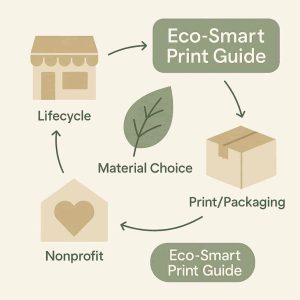
 Sustainability can sound abstract until it shows up in everyday print and packaging choices. For small businesses and nonprofits, the challenge is staying responsible without stretching budgets or losing quality. Thankfully, environmental science now offers clear ways to spot what’s truly sustainable, looking at recyclability, material sourcing, inks, coatings, and waste impact. Many organizations leaning into sustainability also prioritize support for local businesses, reinforcing community-driven growth and responsible production. Even community-centered guide hubs like Stand With Main Street resources offer business-focused resources that help founders and charity leaders understand grants and eco-smart decisions early. In the end, choosing sustainable print and packaging isn’t about changing everything, it’s about knowing what to look for so you invest in materials that match both your values and your budget.
Look at the Full Life Cycle
One of the most essential principles in environmental science is life-cycle thinking. A material is not sustainable just because it is recyclable or made from something natural. What matters is the impact from start to finish. That includes extraction, manufacturing, transportation, usage, and disposal.
For example, a heavy recyclable glass jar may use more energy to produce and ship than a lightweight pouch made from recycled plastic. And some biodegradable materials only break down under industrial conditions, not in backyard compost or landfill. So instead of relying on labels, dig into where the material comes from and where it realistically ends up.
Small organizations do not need complete life-cycle assessments, but they can ask better questions. How much energy does this material take to make? How far does it travel? Will customers actually recycle it? These questions alone can shift decisions toward better options.
Start with Recycled and Responsibly Sourced Paper
Paper is still one of the most common materials for printing and packaging. It is also one of the easiest places to make cleaner choices. Recycled paper usually has a much lower environmental footprint, mainly when it contains high post-consumer content. It reduces demand for virgin wood and cuts energy and water use during manufacturing.
If you do need virgin fiber for labels, sturdy boxes, or premium print pieces, look for certifications from credible forestry groups such as FSC or PEFC. These programs track wood from sustainable forests and help prevent illegal logging. And remember: heavier paper is not always better. A slightly thinner grade often works just as well and reduces material use immediately.
Choose Better Inks and Finishes
Inks and finishes can turn an eco-friendly material into a problem. Petroleum-based inks release volatile organic compounds, which contribute to air pollution and worker exposure. Soy-based vegetable inks are not perfect, but they have far fewer VOCs and often perform just as well.
Finishes matter too. Laminates, glossy coatings, and foils make printed pieces harder to recycle. If you need durability or moisture resistance, water-based coatings are a cleaner compromise. And if you use foil stamping, choose it sparingly. Most recyclers can still process paper with small amounts of foil, but heavy coverage becomes an issue.
Be Skeptical of Biodegradable and Compostable Claims
Bioplastics and compostable packaging sound appealing, yet they can be misleading. Many compostable plastics only break down in industrial facilities with specific heat and moisture conditions. Most communities do not have those facilities. In regular landfill conditions, they behave much like conventional plastic.
If you want compostable materials, stick to options certified by reliable programs such as BPI or OK Compost. And think about your audience. If your customers do not have access to proper composting, the material may not deliver any real benefit.
Minimize Material Before You Optimize It
The most sustainable packaging is the one you do not need. Before switching materials, consider how much you use. Can your shipping boxes be a size smaller? Can you reduce padding by improving the fit? Can print runs be trimmed to avoid waste?
Small businesses and NPOs often work with tight budgets, which encourages smarter use of material. Reducing quantity lowers costs and environmental impact simultaneously. It also prevents the trap of over-designing packaging simply because it looks premium.
Choose Local When Possible
Transportation has a major environmental cost. Even the greenest material can lose its advantage if it travels halfway around the world. When possible, work with local printers, box makers, and label suppliers. This shortens shipping distances and gives you more control over production practices.
Local vendors are also more flexible. And if you are a nonprofit, many small print shops offer community discounts.
Avoid Wish Cycling and Make Disposal Clear
One of the biggest sustainability problems is wish cycling, when people toss items into the recycling bin because they hope they are recyclable. You can help prevent this by giving customers simple, accurate disposal guidance.
If your mailers are curbside recyclable, say so plainly. If your packaging has mixed materials, explain how to separate them. And if something is not recyclable at all, be honest. Customers appreciate clarity, and proper disposal keeps materials out of the wrong waste streams.
Partner with Printers Who Prioritize Sustainability
Not all suppliers operate the same way. A printer or packager that uses renewable energy, manages waste responsibly, and invests in efficient equipment is already doing part of the work for you. Ask potential partners about their practices. Many transparent vendors will share details about their ink systems, recycling processes, and energy use. Sustainability is not all or nothing. Small changes add up, especially for small businesses and nonprofits that interact closely with their communities.